

Tables of Contents
- Common Causes of Clogged Shower Drains
- How to Unclog a Shower Drain
- How to Prevent Hair Buildup in Your Shower Drain
- When to Call a Professional for a Shower Drain Clog
Is water pooling around your feet when you shower, or draining more slowly than it should? Chances are, your shower drain is clogged. This is extremely common, and in most cases, the cause is simple: hair blocking the drain just below the surface.
As hair builds up, it mixes with soap and oils, forming a stubborn clog that blocks water flow. Even with careful habits, it doesn’t take much for this kind of buildup to develop over time.
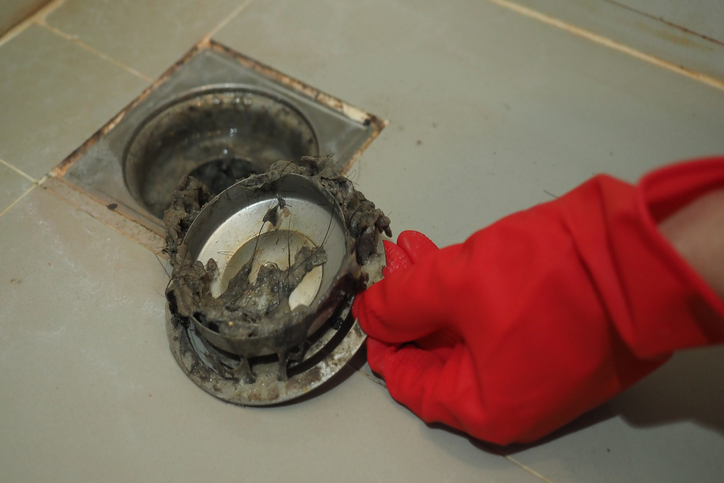
Here’s a picture showing hair and debris buildup in a shower drain:
The good news is that many shower drain clogs can be fixed with simple at-home solutions. In this guide, we’ll cover the causes of shower drain clogs, how to unclog a shower drain, tips to prevent future blockages, and when it’s best to call a professional.
Common Causes of Clogged Shower Drains
Shower won’t drain? Here are some common reasons your shower drain might be clogged:
- Hair Buildup: Hair is the main reason shower drains get clogged. When hair mixes with soap and oils, it can create blockages that slow down or even stop water from draining.
- Soap and Conditioner Residue: Soap, shampoo, and conditioner can leave a sticky residue inside your pipes. When this mixes with hair, it traps other debris, forming stubborn clogs that slow drainage.
- Hard Water Mineral Buildup: Minerals from hard water, such as calcium and magnesium, can build up inside your pipes. This narrows the drains and traps hair and soap scum, which can cause blockages.
- Foreign Objects in the Drain: Small things like jewelry, bath toys, or dirt can fall into the drain. When these mix with hair and soap residue, they make clogs even worse.
- Oils and Fats from Hair and Products: Oils from hair, shampoo, or body products can stick to debris in the pipes. This forms sticky clumps that slow or block water flow.
- Pipe Condition Issues: Old, corroded, or uneven pipes can create low spots where debris collects. This makes your shower drain more likely to clog.
- Tree Root Intrusion: Tree roots sometimes grow into sewer lines. This can cause backups and repeated clogs in several drains around your home, including your shower.
How to Unclog a Shower Drain
If your shower is draining slowly or clogged, here are some simple ways to unclog your shower drain before calling a professional:
Use Boiling Water
Boiling water is a tried-and-true method for clearing minor clogs. Just boil a large pot of water, then slowly pour it down the drain in two or three parts, waiting a few seconds between each pour. The heat helps break up soap scum and grease that hold onto hair and other debris.
Important: If your plumbing has PVC pipes, be careful. Boiling water can soften the joints and cause damage. This method is usually safe for metal pipes, but always use caution.
Use Baking Soda and Vinegar
If boiling water doesn’t work, you can try a natural method using baking soda and vinegar. This is easy to do with items you probably already have at home.
- Pour ½ cup of baking soda directly into the drain.
- Next, pour in ½ cup of vinegar and let the mixture bubble for 15 to 30 minutes.
- While you wait, heat about 2 liters of water until it is very hot but not boiling. You can add ½ cup of salt for extra cleaning power.
- Carefully pour the hot water down the drain to wash away any loosened hair, soap, or debris.
If you don’t like the smell of vinegar, you can use lemon juice instead. Its acidity works in a similar way.
Important: Do not use very hot water in PVC pipes, as it can soften or damage them. This method is safe for most metal pipes.
Use a Plumbing Snake
A plumbing snake is a specialized tool designed to break through tough clogs that other methods can’t reach. It can be effective at removing hair and debris stuck deep inside your shower drain.
However, a plumbing snake must be used with care. WE DO NOT RECOMMEND using one on your own. If it’s not handled correctly, it can damage your pipes or the tool itself, and it can get messy fast.
If you’re unsure how to use one properly, or just want to avoid the hassle, it’s always safest to call in an expert like a Zoom Drain technician.
Steps to using a plumbing snake on a shower drain:
- Remove the shower drain cover.
- Insert the snake into the drain slowly until you feel resistance from the clog.
- Turn the handle gently to hook the hair or debris.
- Slowly pull the snake out, bringing the clog with it.
- Flush the drain with hot water to clear any remaining residue.
Use a Plunger
When you think of a plunger, you probably think of a toilet, but they’re also great for sucking up hair and debris when placed over your shower drain.
Steps to using a plunger on a shower drain:
- Remove the shower drain cover.
- Pour enough water onto the shower floor so the bottom of the plunger cup is covered. This helps create a good seal and suction.
- Place the plunger right over the drain and make sure the cup seals the opening completely.
- Push the handle down, then pull it up quickly several times to build suction and pressure. This should help loosen the clog.
- Lift the plunger and check if the water drains. Repeat as needed until water flows freely.
- Flush the drain with hot water to wash away any loosened hair, soap, or debris.
Use a Coat Hanger or a Hook
If you have a clog near the top of your drain, try using a wire coat hanger or a small hook to clear it. This is a simple fix that works well for beginners and is unlikely to cause damage to your pipes.
Here’s how to unclog your drain with a coat hanger or hook:
- Straighten out a wire coat hanger and bend one end to form a small hook.
- Remove the drain stopper if necessary for better access.
- Put the hooked end into the drain and gently search for hair or other debris.
- Pull the hanger out, remove any gunk you find, and throw the debris away.
- Rinse the drain with hot water to remove any remaining residue.
Use Your Hands (With Gloves)
If the clog is close to the surface, you may be able to remove it by hand with gloves. Start by removing the drain cover and checking the drain opening or the screen trap.
Carefully pull out any visible hair or debris stuck on the stopper or just below the surface. Then throw away what you collect and run hot water down the shower drain to wash away any leftover residue.
Just keep in mind that this can be messy, and what you see may only be part of a larger clog deeper in the line.
Use Eco-Friendly Drain Cleaners
If other methods haven't worked, try an eco-friendly drain cleaner to safely remove hair and soap buildup from your shower drain.
We offer Zoom Bio, which uses special bacteria to break down organic material inside your pipes. Unlike strong chemical cleaners, this solution won’t damage your plumbing or septic system, making it a safer option for tackling tough shower drain clogs.
How to Prevent Hair Buildup in Your Shower Drain
To keep your shower drain from getting clogged with hair, try these simple habits:
- Put a fine-mesh or silicone hair catcher over your drain to trap loose hair before it goes down the drain.
- Brush your hair before you shower to cut down on how much hair falls out in the tub.
- Once a month, pour hot water down the drain to help clear away soap and small buildups.
- Every so often, pour baking soda and vinegar down the drain to break up any gunk inside.
- Clean off the drain cover often to get rid of any hair or debris stuck there.
Following these habits can help you avoid hair clogs and keep your water flowing smoothly.
When to Call a Professional for a Shower Drain Clog
If you’ve tried to unclog your shower drain but it’s still draining slowly or remains clogged, it might be time to call a professional.
.2602030600468.jpg)
Here’s when to consider calling a professional:
- Water still pools in your shower even after you’ve removed hair clogs.
- Hair clogs keep coming back, even though you clean and try to prevent them regularly.
- More than one drain in your home is slow or backing up, which could indicate a larger problem.
- You notice bad smells coming from the shower drain that don’t go away after cleaning.
- You think there might be pipe damage or a clog deep in the plumbing that you can’t fix yourself.
A drain and sewer specialist can safely inspect your drains, clear tough hair clogs, and recommend long-term solutions to prevent future problems.
Get Rid of Your Hair Clogs with Zoom Drain Today
Dealing with a slow or hair-clogged shower drain?
Call your local Zoom Drain! We respond fast, and most locations are available 24/7, 365 days a year, with no extra charge for nights, weekends, or holidays. Our team can handle stubborn hair clogs and more serious drain issues.
Our trained drain and sewer specialists will come out quickly and at no cost to inspect your drains and restore proper drainage, so you don’t have to deal with hair clogs or slow drainage on your own.
Get Your Life Flowing Today® with Zoom Drain!